The end of an era: Hodder Wideworld
Written April 2026
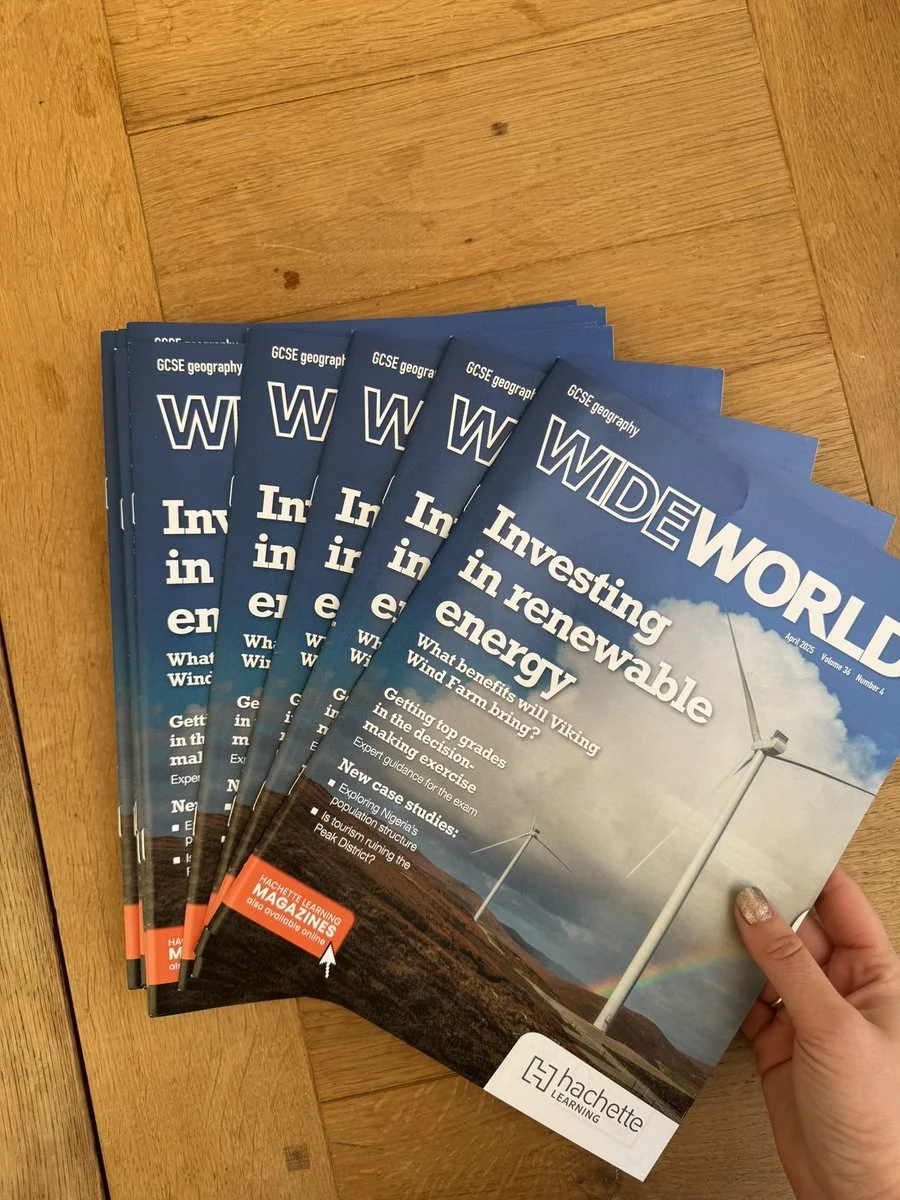
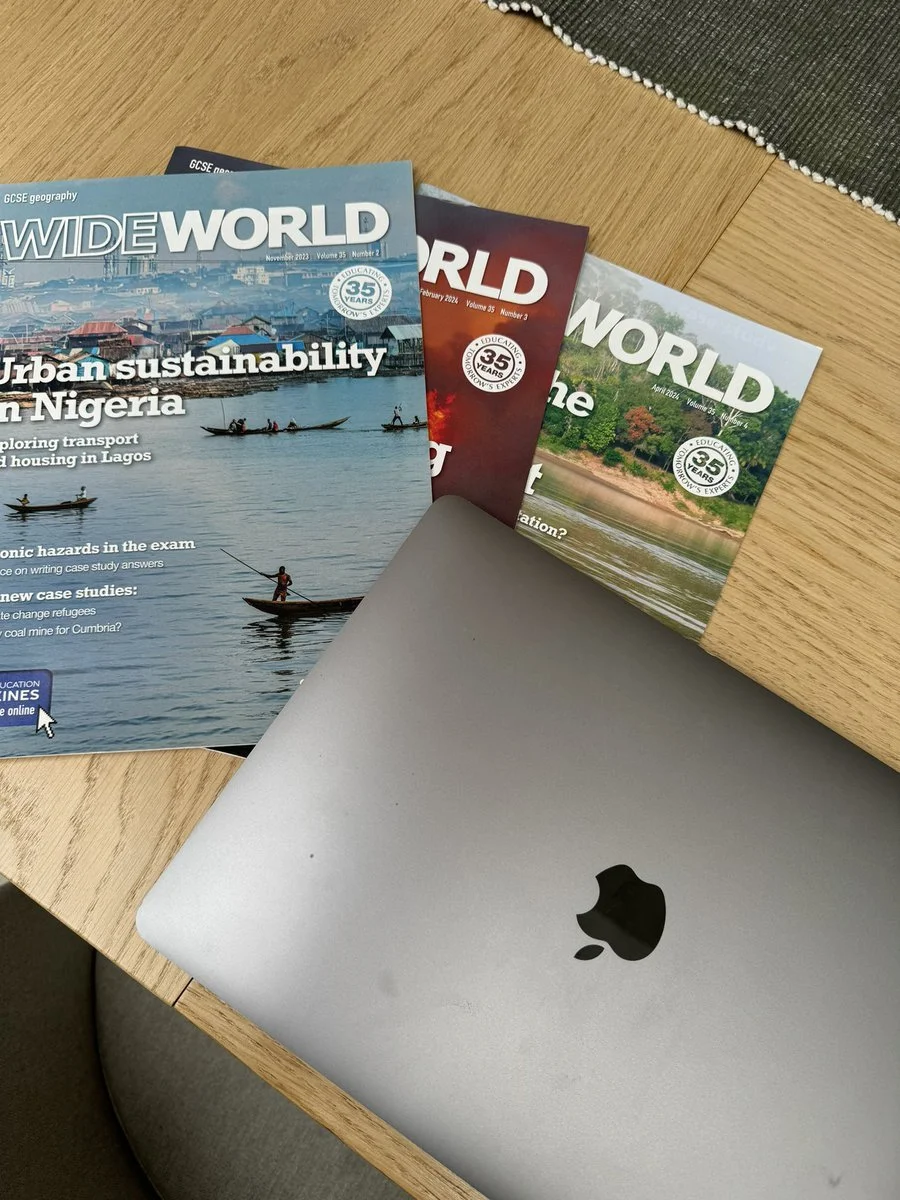
As some of you will know, since August 2021 I’ve been part of the Editor team for Hodder’s Wideworld magazine alongside the wonderful Michelle Minton and Jane Ferreti. Recently however, that role came to an end with Hodder (now Hachette Learning) stopping publication of all of their educational magazines in April 2026.
Upon the news that the magazines were coming to an end, David Redfern was straight off the starting blocks with this important blog in response. I read it, nodded along and I knew I wanted to respond and to collect my own thoughts about the implications of the end of these publications. Alas, time ran away with me and it’s taken the delivery of the last magazine to spur me on to collect my thoughts. Here goes…
The value of Wideworld as a resource
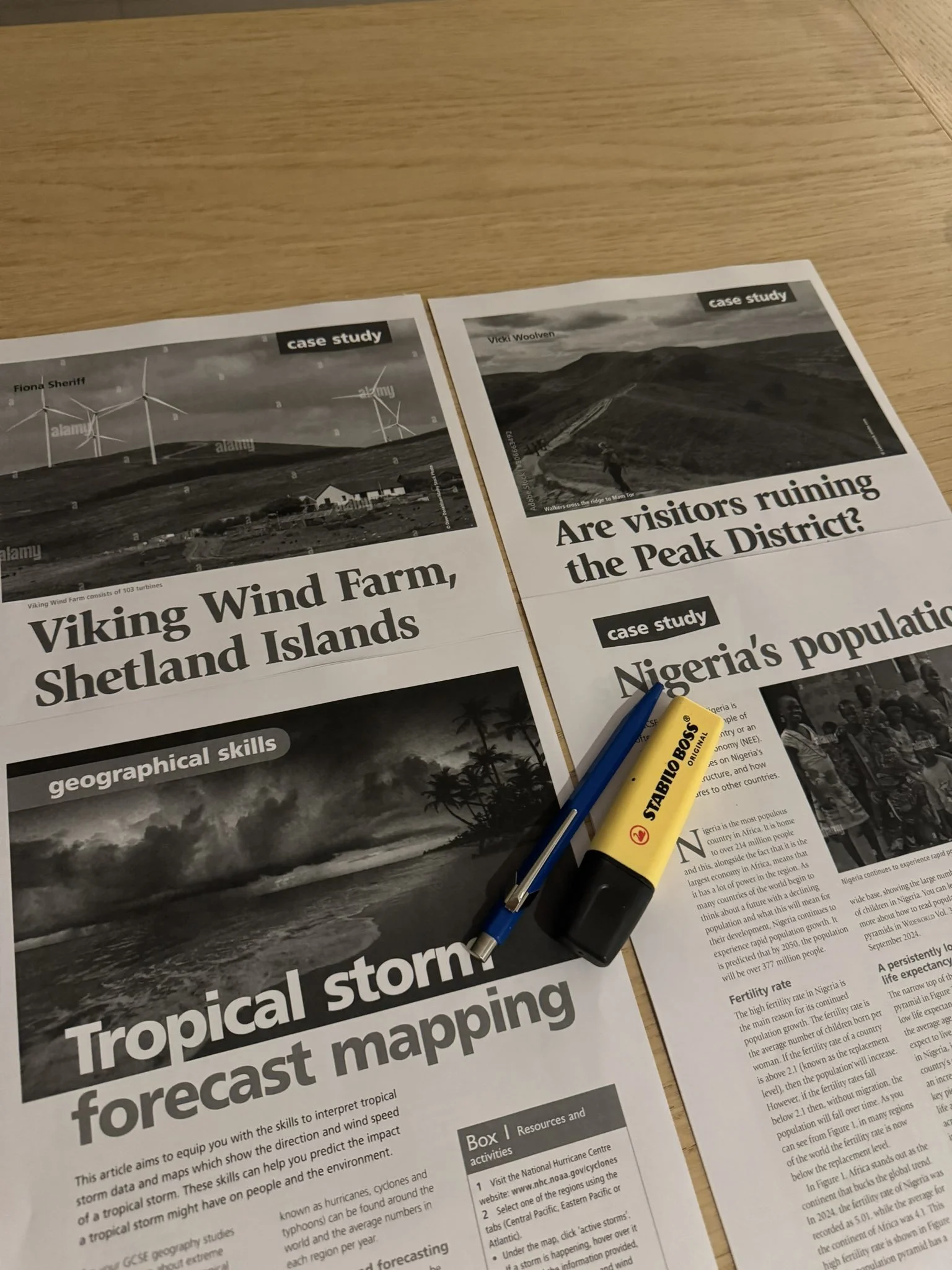
One of the biggest challenges for resourcing a high-quality geography curriculum is that the textbooks are out of date as soon as they’re published. Whilst the magazine faced the same problem, the lag time on our articles was much shorter and we were published 4 times a year- allowing us to be responsive to real-world geographical issues.
The authors (mostly teachers still in the classroom) used their expertise to pitch the articles to the right level and ensure they would land in a room full of mixed-ability GCSE students. Additionally, as a team with many years experience in the classroom, we knew the rhythm of many geography curriculums and planned articles to provide timely updates when we knew many people would be, for example, teaching tectonics or completing fieldwork.
To some extent, this gap in up-to-date resources can, and will, be filled by other players and I’m sure new resources will emerge in time but I also know I speak for many when I say that this publication will be missed as an excellent classroom resource. If you don’t already subscribe to David Redfern’s and Will Fry’s Substacks for excellent articles to use in the classroom, do so now! Although aimed at A-Level, some are suitable for younger students too.
The value of Wideworld as a platform for writers
I could go on and on about the value of this magazine in the classroom but, I hope, many already know that. So, I’d like to reflect on something perhaps less obvious: that Wideworld was a very important platform for many classroom teachers to try their hand at writing for a broader audience. Teachers are inherently creative; we write resources day in, day out and, for many, this is one of the best elements of the job. But, it can be daunting to share your work with a wider audience and indeed, hard to know how to do so. In my opinion, this is where Wideworld was invaluable and will be sorely missed. If anyone ever asked me ‘how do I get involved in writing more broadly? How do you get involved in those sorts of projects?’ then my answer was always to give Wideworld a go. Michelle, Jane, and I regularly tweeted to attract and encourage new authors; we knew the importance of having a diverse range of authors contributing to the publication.
Importantly, authors were also paid competitively for their work. It’s a particular bugbear of mine how much writing is un-paid or given only a token payment- I was proud to be able to tell authors that this was a (well) paid opportunity. It was also relatively low stakes: even if the article didn’t get accepted (which was pretty rare), it was likely you would go on to use it with your own class. When your article was accepted, you knew that it was going to be edited by one of the team and then reviewed twice in the proofing-process- I know that when I first started writing in 2018, I found this process very reassuring. So, as we lose Wideworld, we lose a very important platform to find the next generation of textbook and resource writers.
And, we do so at exactly the same time that the growth of MATs means a smaller number of people having ever-increasing control over the geography curriculums taught up and down the country. As a Trust Lead myself, I risk sounding hypocritical here but I know how important it is to maximise the contributions to the geography curriculum conversation. For me, reading the articles of Wideworld was an important way of learning from, and hearing the voices of, other geography teachers. What were others teaching their students? What issues and case studies did others feel were important for young people to learn about? What language were they using to do so?
As we lose this platform and fewer and fewer teachers are using social media to share their work, what does it look like to learn from each other in 2026 and beyond? How can we hear the diverse voices of classroom teachers from across the country and around the world? How can we find out what’s happening in their classrooms? Of course, Wideworld wasn’t the only platform and if you don’t already, I’d recommend regularly checking (and perhaps offering to write for) the GA Blog and the new LearningToTeach Substack. There is, of course, the Teaching Geography journal too.
So, as is probably clear, in losing Wideworld (and Geography Review), I believe the geography community is losing a lot. I would like to say a huge thank you to everyone who contributed to the magazine in the time that I worked on it. I learnt so much from your knowledge, creativity and expertise!