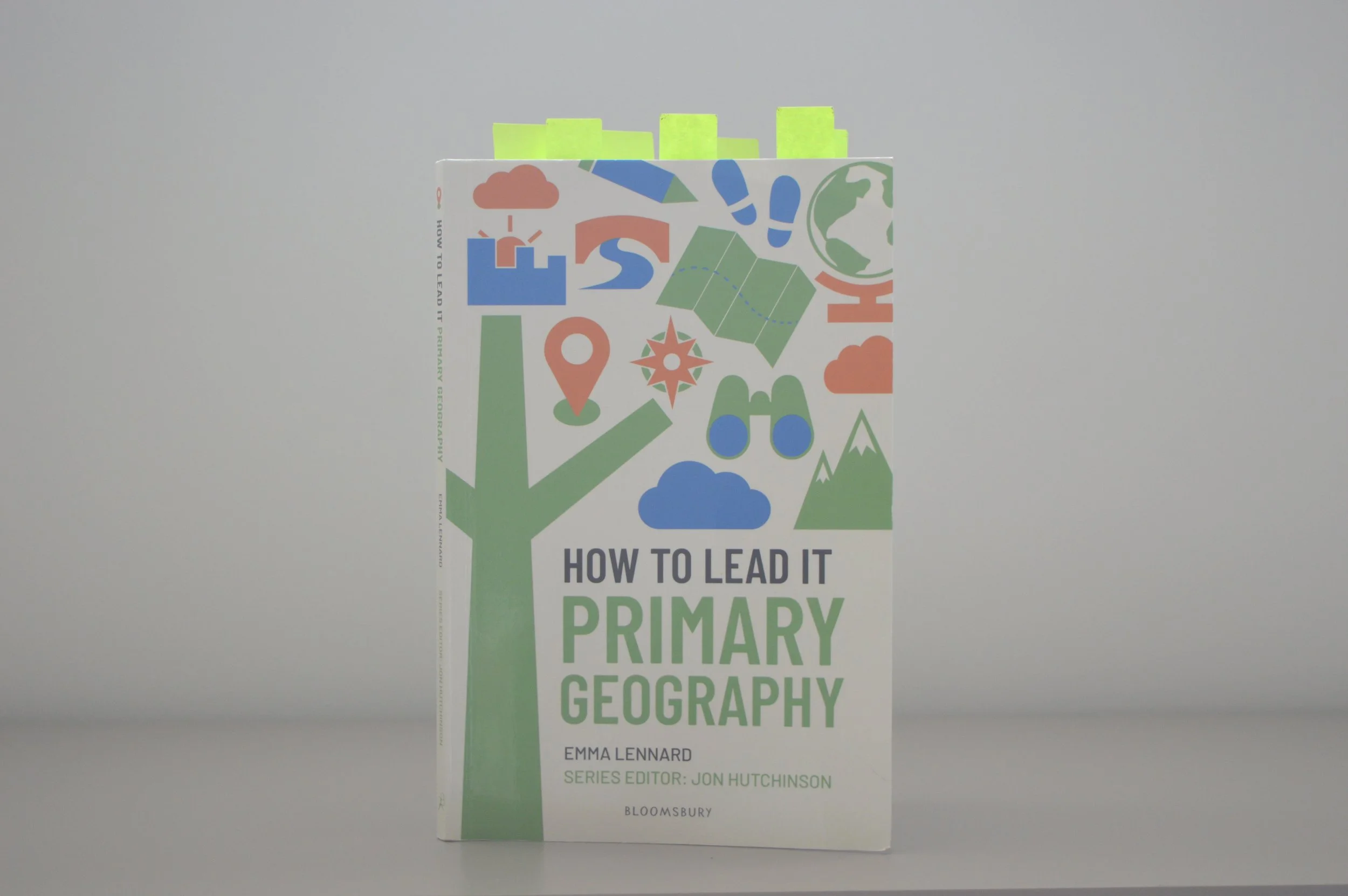
March 2026
Overall Verdict: ★ ★ ★
To buy this book, click here.
Why this book?
Although I’m not the intended audience for this book, I can never resist reading about teaching and leading geography and I was intrigued to further consider what a high-quality primary geography experience looks like for students before they embark on our KS3 curriculum. Whilst it’s aimed at a primary audience, there are many snippets that are very useful as a secondary geography leader and particularly for someone who works with SCITT trainees as a key part of their role (which I do!)
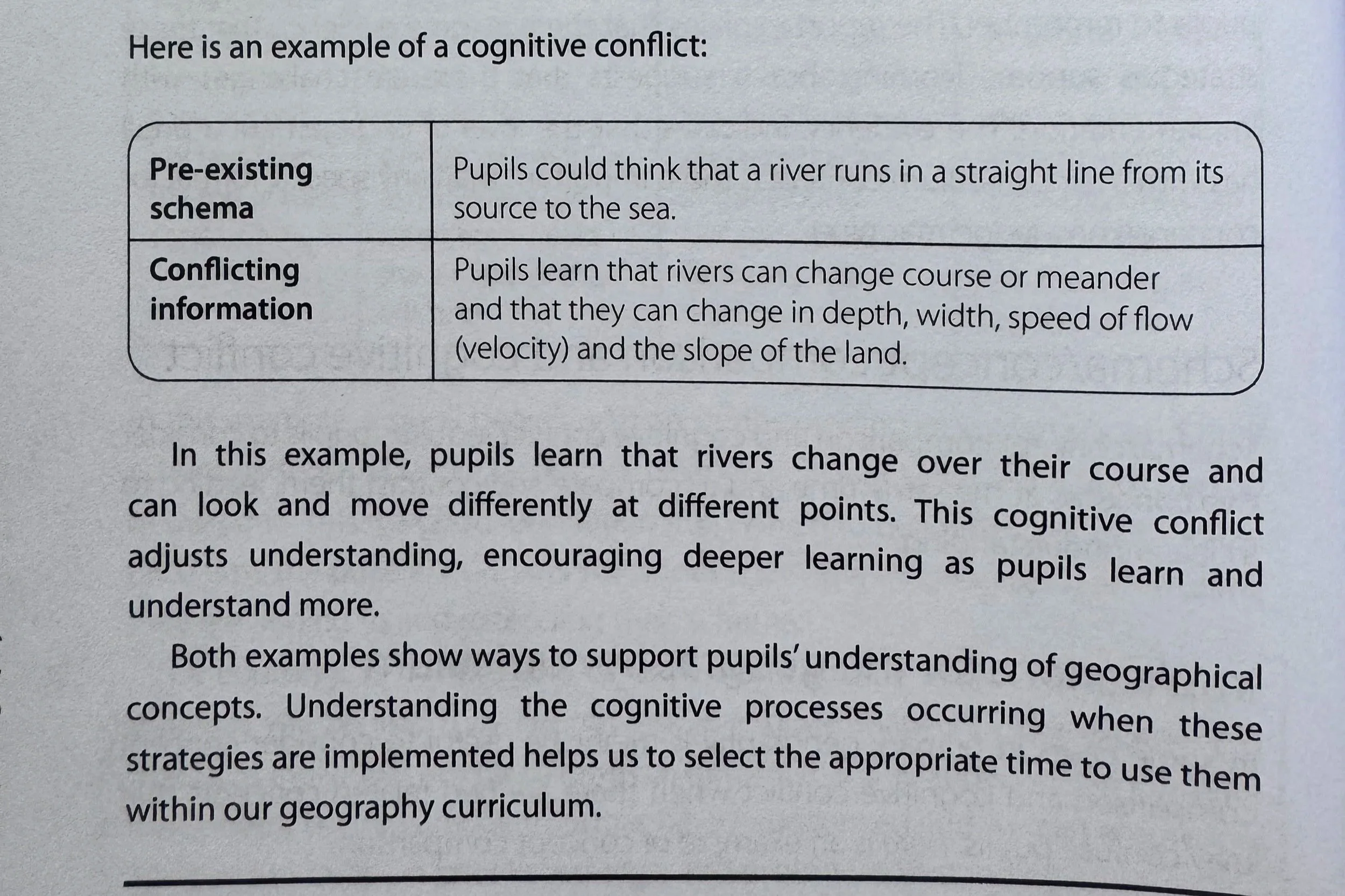
The book bridges theory and practice incredibly well; the ‘big picture’ and evidence based is discussed before being explicitly linked to what happens in a geography classroom. For example, I was introduced to the terms ‘concept comparison’ and ‘cognitive conflict’ and their significance in geography where there are two related concepts that may confuse pupils if not taught explicitly enough. The first photo below shows the example given in the book. Whilst cognitive conflict regarding the long profile of a river may be more of an issue at primary than secondary, there will be plenty of other examples of this in secondary classrooms too- something to reflect on!
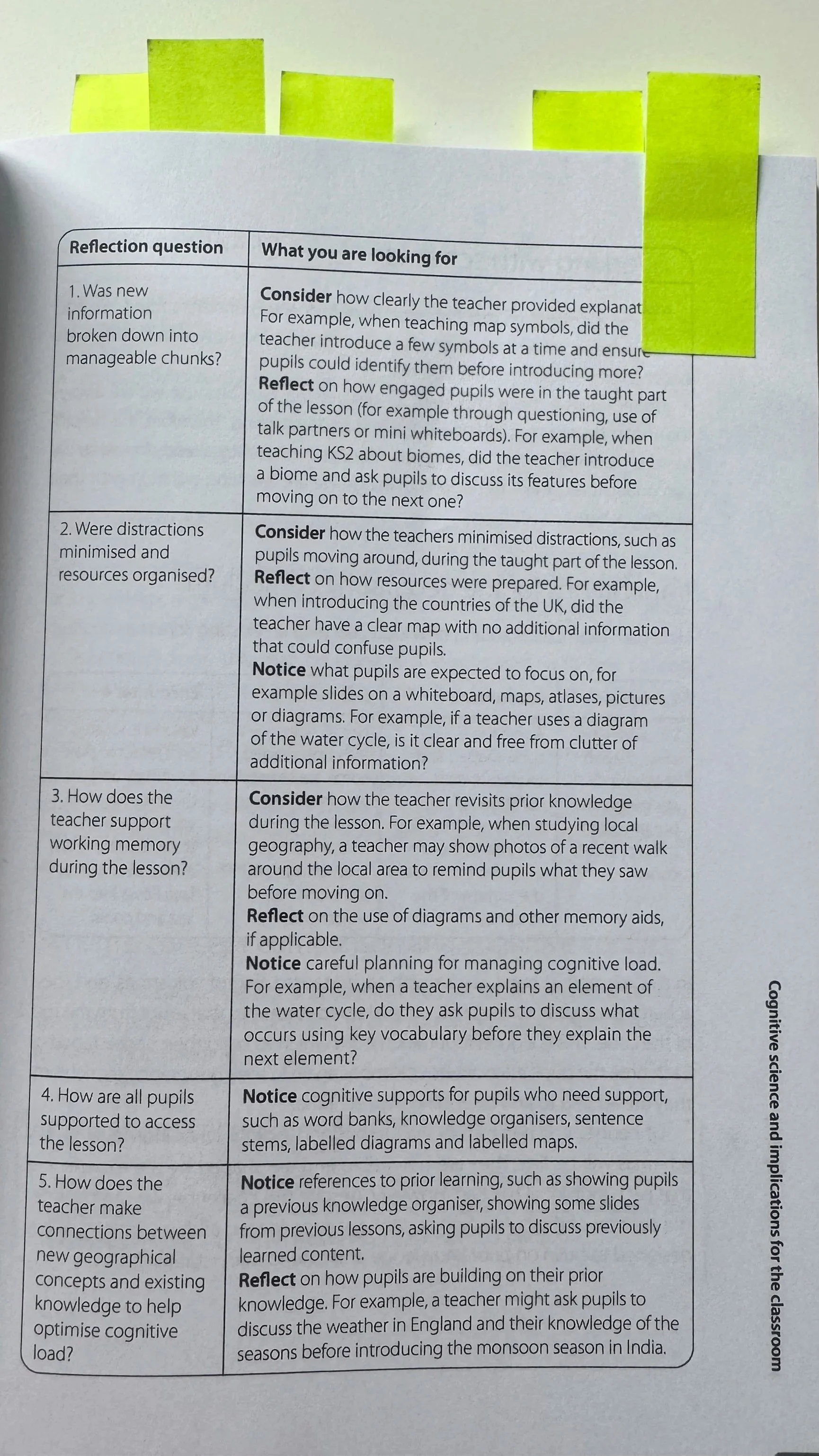
Throughout the book there are very useful tables that provide guidance for how to put the theory and research into practice. Whilst primary examples are obviously used in the tables, the content and reflection questions are equally as valuable in a secondary setting. So, I’ll be taking a few and adding them to my training resources. For example, I’ll be using the table on p.27 (the second photo below) with our trainees to consider how to manage cognitive load in a geography classroom. I will also be using the table from p.70 about how to introduce new vocabulary in geography and the table from p.72-73 about ideas for scaffolding writing.
Whilst I clearly took ideas and food for thought from the book, I did find the flow of the book (or lack of…) difficult. I felt like we were jumping all over the place with regards to what we should be considering in a geography classroom and curriculum- and that’s from someone who thinks about this stuff a lot! For a non-specialist leader of geography, I think you would need a well-developed understanding of the different components of the subject and discipline before using this book which is perhaps a tension when aimed at a primary audience. That said, for dipping in and out of to improve elements of your practice, it certainly has value.
Three key takeaways:
1. It is not possible to understand exactly what individual pupils’ schemas may be like. They are not visible and are shaped by the experiences that each individual has had. However, despite this challenge, we can consider the content of the curriculum pupils have experienced and we can ensure it is designed to build on prior knowledge and extend understanding (p.28).
2. Cognitive conflict adjusts understanding, encouraging deeper learning as pupils learn and understand more (p.30).
3. Geography has a central role in young people’s developing identity and their sense of belonging. Primary teachers seem to know and recognise this in a way that perhaps we risk forgetting in secondary geography classrooms. How do we help students construct ideas of place and space and make connections between their own experience and the world in our secondary curriculums? Do we do this well enough?
To buy this book, click here.
How to lead it Primary Geography
Previous
Previous
Secondary Geography In Action
Next
Next