Books of KS5 (human) geography
Upcoming CPD for Edexcel A-Level Geography
I’m really looking forward to joining Cooper Education again in September for 2 webinars that look at how I teach the 2016 specification in the (very different!) world of 2026. To book for the Globalisation webinar, click here. For the Superpowers webinar, click here.
Written March 2026
As I’ve written about elsewhere (here and here), this academic year has seen me undertake a big revamp of my A-Level resources. Whilst I’ve tweaked my resources each year (as is essential when teaching the human side of the course), I hadn’t done a proper revamp for a while and it was needed; I was shocked how much over-teaching remained in my resources even 10 years into teaching the course! The challenge of over-teaching is something I regularly talk about and offer solutions to in CPD I deliver for Cooper Education- details of my next webinar are here.
As part of this revamping work, I’ve taken a critical look at the books that we explicitly use in our teaching of the human topics. I’ve long been a fan of using high-quality texts to support the teaching of geography but I always want to ensure it is purposeful. That’s why the ‘On the bookshelf’ page of my blog has always remained a carefully curated list- I don’t want to be tempted to randomly add in extracts or references to books that, whilst they may be a good read and loosely geographical, don’t really add anything to our curriculum and teaching. I will, of course, signpost additional books to students in the class who show an interest but, if a book has a place in our resources, it must be adding something specific and I must have thought carefully about what this is.
So, as part of this resources revamp, I looked back at the books used and asked myself this key question: how is this book used in a meaningful and purposeful way to support our A-Level teaching? I ensured that the texts used were actually enhancing what we need students to know and understand without going too off-piste. I considered the difference between ‘essential reading’ that was helping us to teach the specification and ‘extra reading’ to go above and beyond the specification (ideas for doing that here). I made sure this difference was clearly signposted to students. Finally, I checked that each time a book extract was used, there was a clear task associated with the text that meant students weren’t just being instructed to aimlessly read.
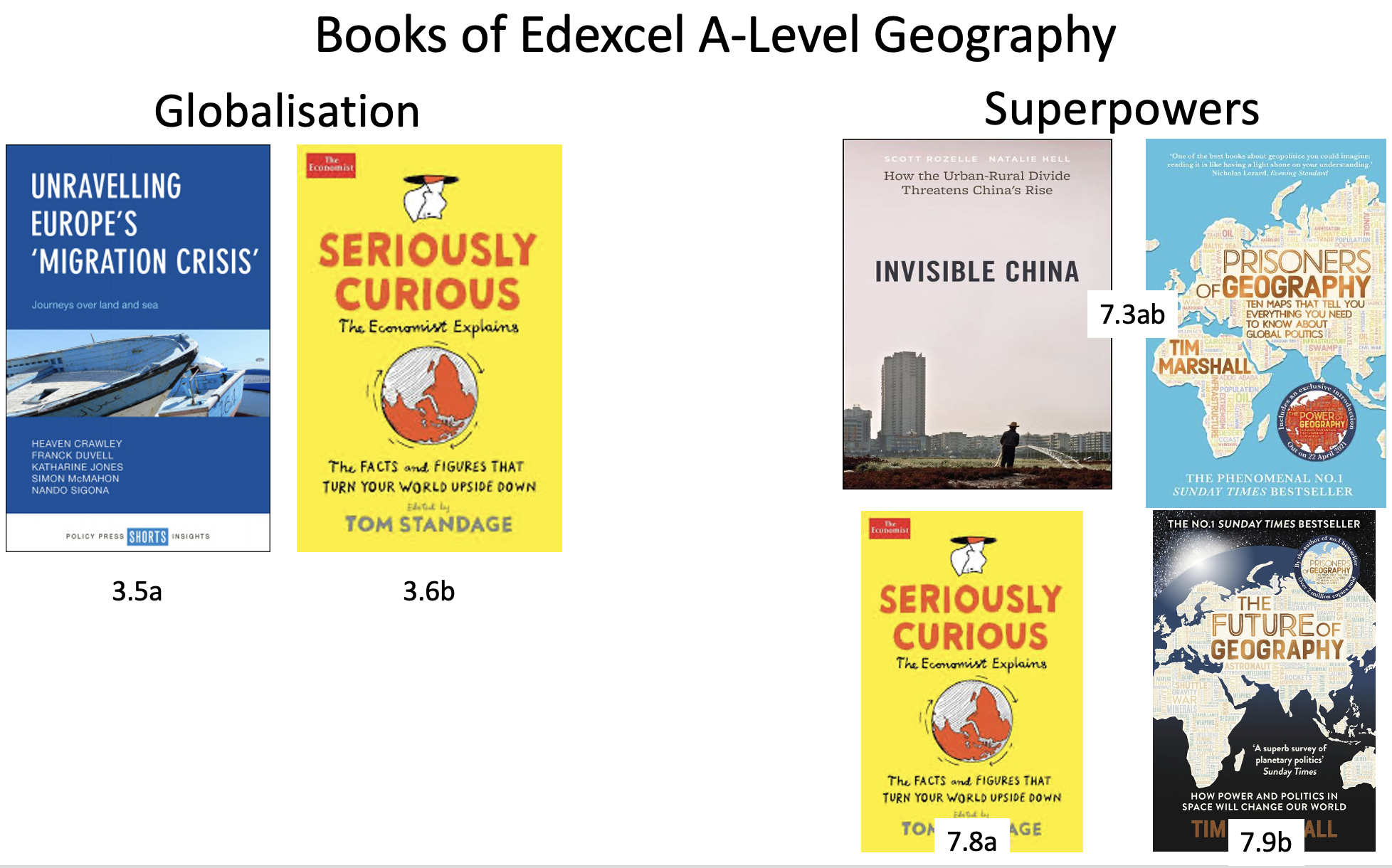
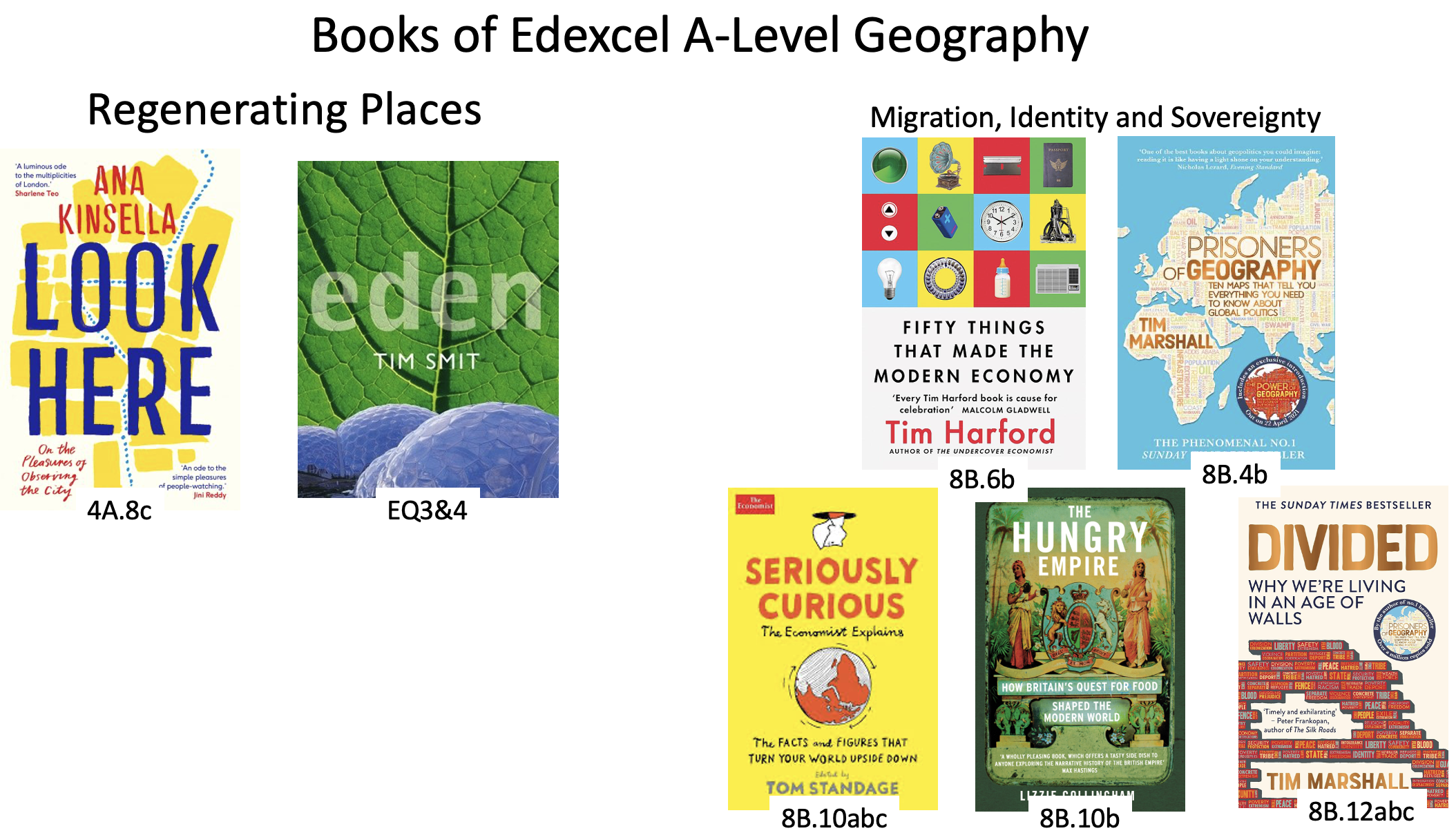
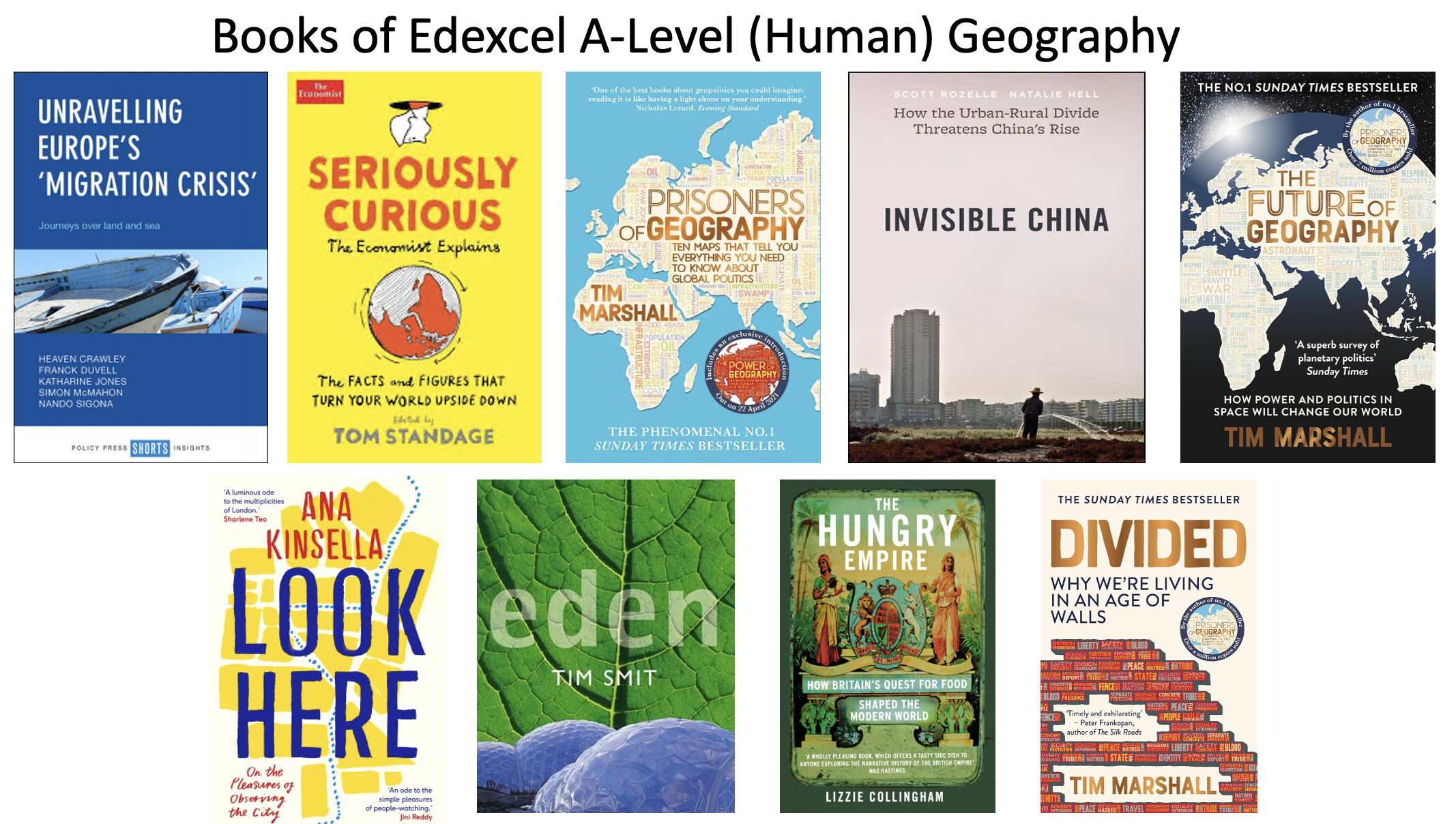
The outcome of this audit is the 9 books of our KS5 Human Geography curriculum. Of course, each book is used to a varying amount. Entire chapters of Prisoners of Geography are read when teaching about contested borders whilst a short extract from The Hungry Empire is used when discussing the significance (and complexity) of tea as part of British culture and national identity. Whilst a few pages of Seriously Curious are read throughout the Globalisation and Superpowers topics, several pages of Divided are read to consider independence movements in the EU and UK as part of Migration, Identity and Sovereignty.
As we near the end of our 10th year teaching this specification, I’m pleased I did this work and revisited the use of text in my teaching. What books might be added in future years? What might this book list look like for any future curriculum? I look forward to seeing and one thing’s for sure; I’ll keep reading…
The specification points where each book is used is shown in the images below.